Barstool Sportsbook
From a single engineer to a 300-person engineering team, and a real-money sportsbook live in 13 states.
- Role
- VP and Head of Engineering, Penn Interactive
- Period
- 2019 to 2022
- Scale
- 1 to 300 engineers (2019 to 2022) · 13 states live (Sept 2022)
- Status
- Rebranded ESPN BET, Nov 2023
What problem were we solving?
In May 2018 the Supreme Court struck down the federal ban on sports betting, and the decision passed to the states. Each state that legalized it wrote its own rules, licensed its own operators and certified their software on its own schedule.
Penn National Gaming (now Penn Entertainment) was the largest regional gaming operator in North America. Online, its digital arm, Penn Interactive, ran free-to-play social casino games. What it needed was a real-money sportsbook it controlled, ready for whichever state opened next.
In August 2019 Penn licensed Kambi’s sportsbook engine for the odds, trading and risk management, and kept the front end, everything a customer sees and touches, for us to build.
In January 2020 Penn agreed to buy 36% of Barstool Sports, with the exclusive right to put the Barstool brand on its sports betting and online casino products. That changed the size of the problem. The brand would bring customers on day one. The app had to take their deposits, settle their bets correctly and pass certification in each state as it opened, often on a launch date the state chose.
What was my responsibility?
I joined Penn in 2019 as Head of Engineering for Penn Interactive, and I was the team’s first engineer. I owned engineering across mobile, web, platform and data, plus QA and technical program management: hiring the teams, shaping them and getting the product through each launch. In practice I was the de facto CTO, and I owned a multi-million-dollar engineering P&L, planned with FP&A over several years. I also managed our relationships with state gaming commissions through my technical compliance team, ran technical due diligence on acquisition targets, and connected the apps to Penn’s casinos through loyalty, kiosks and data pipelines.
Before the Barstool deal we were about 20 people in a WeWork in Philadelphia, working through some early wins and a proof of concept: a small, unbranded sportsbook. After the deal we had the budget to build the team the launches needed. By launch day in Pennsylvania we were 35 people.
What consequential decision did I make?
License the trading, learn the business
The biggest call was what not to build. My team knew nothing about running a sportsbook, so we licensed managed trading, with Kambi setting the odds and managing the risk, while we learned how to run one. That let us put our engineering into the front end customers actually touch.
Hire the people I already trusted, then hold the bar
The first hires decide what the next hundred look like. So before I posted a job, I sat down, listed the smartest engineers I’d ever worked with, including some of my favorite colleagues from Warner Bros., and recruited them one at a time. Nine of my first ten hires had worked with me before. As we grew, I kept hiring senior engineers from outside gaming rather than the usual industry hires, which raised the bar across the whole team.
It cost us very little up front. The one trade-off came later: those first engineers knew me as a solid engineer and respected me for it, and as we scaled, the new people didn’t. They didn’t know me or my personality, and I had to learn to be a leader instead of one of the gang. What it bought was trust. In a product that holds customers’ money and answers to a regulator in every state, I needed people who would tell me when something wasn’t ready, and whom I could believe when they said it was. When the budget came, those first hires became the leads who hired the next layer, and they hired the same way. Quite a few of them went on to become directors and senior directors with large teams of their own.
I kept one interview rule, from engineers to executives: if I thought a candidate would meet our most junior QA engineer and think “I’m more important than them,” they didn’t get an offer. At 20 people I could enforce that myself. At 300 it had to be something every interviewer believed. To save our engineers’ time, we eventually outsourced the technical interviews to a third-party provider we trusted, and that worked well at the time.
What happened?
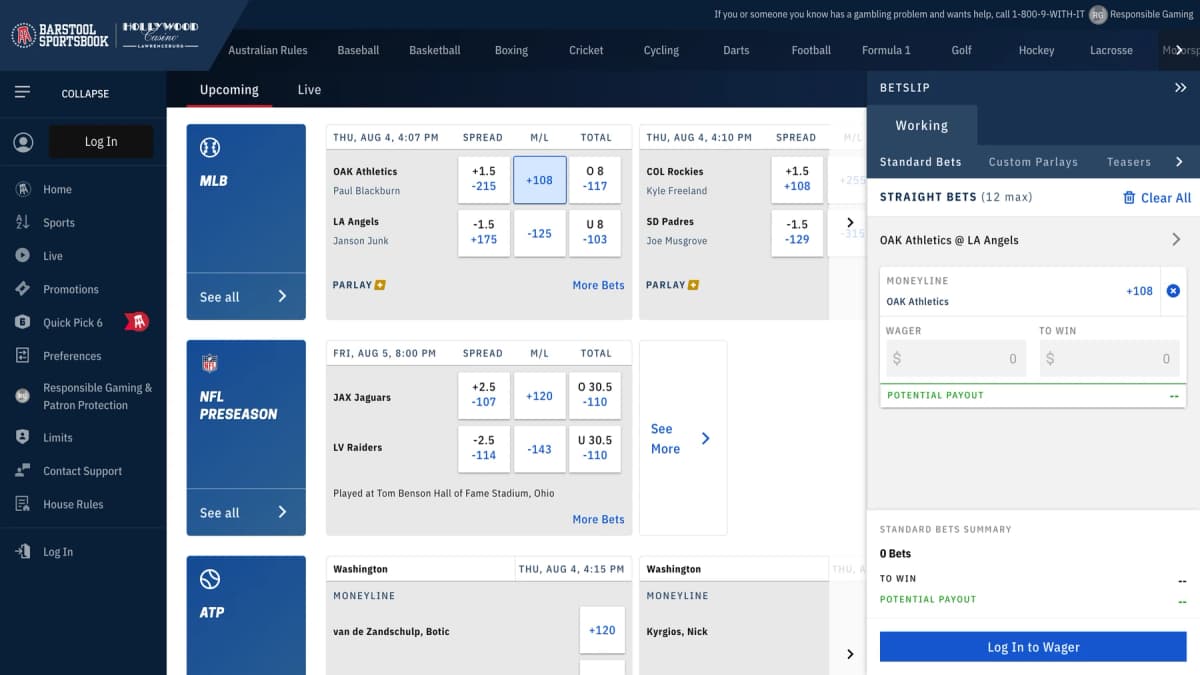
On September 18, 2020, after a three-day real-money test approved by the Pennsylvania Gaming Control Board, Barstool Sportsbook launched in Pennsylvania. Penn said it set the record for downloads at the launch of a new mobile sportsbook. In its first 37 days the app took $78 million in bets from 30,000 first-time depositors, with very little paid marketing.
Then the states came quickly. Michigan opened on January 22, 2021, and more than 48,000 new customers registered in the first ten days. Illinois followed in March and Indiana in May. Between August 9 and September 9, 2021 we went live in five states: Colorado, Virginia, New Jersey, Tennessee and Arizona. At the time, that was the fastest anyone had launched that many states, and it was a big deal. The team was crunching hard that month, and we were stretched thin.
Iowa and West Virginia came late in 2021, and Louisiana in January 2022. In November 2021 Penn reported the app tied for the highest-rated sports betting app in North America on Apple’s App Store, at 4.8 out of 5. By February 2022 it was live in twelve states, with online casino in four of them. Kansas made thirteen on September 1, 2022. I left later that year.
Over the same three years the engineering team grew from one person to 300 engineers. That count includes theScore’s engineers, who joined when Penn bought theScore in October 2021.
After I left, Penn moved the sportsbook onto its own proprietary platform in July 2023 and rebranded it ESPN BET on November 14, 2023. Since December 2025 it has been theScore Bet.
What did I learn or change?
Building the product was hard. Building a team that wanted to keep building together was harder, and it mattered more. Many of those engineers followed me to my next jobs. At one point more than 45 people at Fanatics had come from Penn.
At 20 people I knew how everyone was doing. At 300 I didn’t, and the job changed. Dashboards tell you what happened; the people closest to the engineers tell you why. I started treating my one-on-ones with leads and their reports as the most important hours of the week.
I once kept a brilliant engineer who was hard on the people around him, because I thought we needed him to hit our deliverables. When he left, the team told me the atmosphere changed, and it got more productive. If we’re doing our jobs well, losing one person should never seriously hurt the team, and that includes me.
If I did it again, I would spend more time up front planning for success and for scale. As a leadership team, we were too reactive.
Built by the Penn Interactive team, with our partners at Penn Entertainment and Barstool Sports.