Fanatics Markets
A CFTC-regulated prediction market, from concept to dev-complete in under 90 days
- Role
- VP, Head of Engineering, Fanatics Markets
- Period
- July 2025 to July 2026
- Scale
- About 40 engineers · 24 states in its first three days (Dec 3 to 5, 2025)
- Status
- Live on iOS, Android and web
What problem were we solving?
In late 2025, Fanatics Sportsbook was licensed in 23 states. Each one meant a state license, a state regulator and that state’s rules. Three of the biggest states for prediction markets were all but closed to it: California and Texas had no legal online sports betting at all, and in Florida a single operator holds an exclusive license.
Prediction markets were another way in. An event contract is a question with a Yes side, a No side and a price: who wins Saturday’s game, whether the Fed cuts rates. The contracts are listed on an exchange registered with the Commodity Futures Trading Commission, so they’re regulated federally, not state by state. Whether sports contracts belong to the CFTC or to the states was an open question when we launched, and it’s still in court.
Kalshi and Polymarket had already shown the demand. The question for Fanatics was whether its fans would trade somewhere else or with Fanatics.
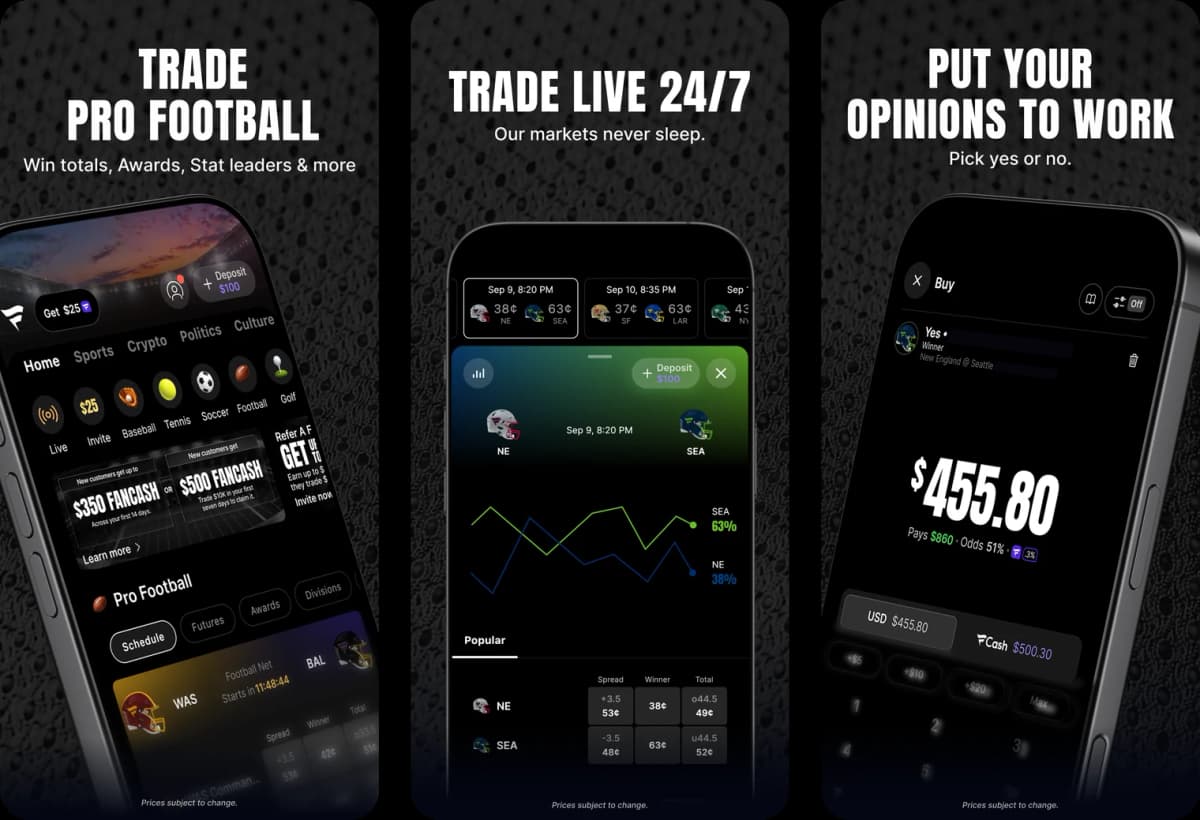
On a phone, some people might say it looks like a sportsbook. It isn’t one. In a sportsbook, Fanatics is the house. A prediction market, as Matt King (MK), CEO of Fanatics Betting & Gaming, put it, is “a two-sided marketplace.” That changes who sets the price, who holds the customer’s money, and which rules apply to every screen. It changes the economics too. A prediction market earns only on fees, so features we took for granted in a sportsbook had to be rethought before they made sense in a market.
What was my responsibility?
I was VP, Head of Engineering for Fanatics Markets from July 2025 until I left for Meta in July 2026. Before that I ran Core Engineering at Fanatics Betting & Gaming, the shared services behind the sportsbook and casino.
The division of labor was public from launch day. Crypto.com | Derivatives North America, a CFTC-registered exchange and clearinghouse, listed and cleared the contracts. The broker was Paragon Global Markets, a CFTC-registered introducing broker that Fanatics bought in July 2025. And Fanatics, in Crypto.com’s words, kept “complete control over the user experience and interface design.”
That last part was ours. My teams built what a customer touched, starting with the iOS and Android apps, and the systems behind them: order matching, which routes each order to its market, the market-data pipeline that ingests markets and enriches them with the details a customer sees, and the tech stack for the NFA-registered introducing broker. By launch day we were about 40 engineers. We didn’t start from nothing, either. We bootstrapped on infrastructure the Fanatics Sportsbook & Casino team had built over the previous two and a half years.
What consequential decision did I make?
The regulated structure under the app was never going to sit still. Two weeks before launch, Fanatics’ CEO, Michael Rubin, told CNBC: “If the regulatory environment says we can do this, then we’re gonna do it. And if it changes, then we’ll change with it.”
For engineering, that sentence is a requirement. We built the customer’s experience so the regulated pieces underneath it could change without the customer noticing: who holds the money, who lists the contracts, who clears them.
We also had to be fast. We wanted Fanatics to be the first major sportsbook operator with a prediction market, other operators were racing for the same thing, and we got there first: dev-complete in under 90 days, live on December 3, 2025.
The public record since shows why designing for change mattered. In March 2026, the National Futures Association approved Fanatics’ own futures commission merchant, Morton St. Trading Investments, so Fanatics could hold customer funds itself instead of routing them through another firm. I was still leading engineering when it was approved, and my teams did much of the work to move onto it; I left before the switch itself. In July 2026, Fanatics agreed to buy Water Street Labs, a designated contract market, and CX Clearinghouse, a derivatives clearing organization, from BGC Group, so it can list and clear its own contracts. That deal was separate, and meant retrofitting BGC’s exchange: I took part in the technical due diligence, but the exchange wasn’t mine to run. That’s a new broker structure and an exchange deal within eight months of launch, under the same app.
What happened?
Fanatics Markets went live on December 3, 2025, on iOS and Android. It was the first prediction market from a major US sportsbook operator, just ahead of DraftKings and FanDuel.
We turned states on in three batches: ten on the first day, nine on the second, and five of the biggest, California, Texas, Florida, Georgia and Washington, on the third. That’s 24 states in three days. At Barstool, five states in a single month had been the fastest anyone had launched at the time, and it was a big deal. Under a federal registration there was no state gaming certification to wait on. Going smallest first was a shared call, and the reason was risk: prove the system scaled before the biggest states arrived.
The first release carried contracts on sports, finance, economics and politics, with deposit limits, session limits, timeouts and self-exclusion already in place.
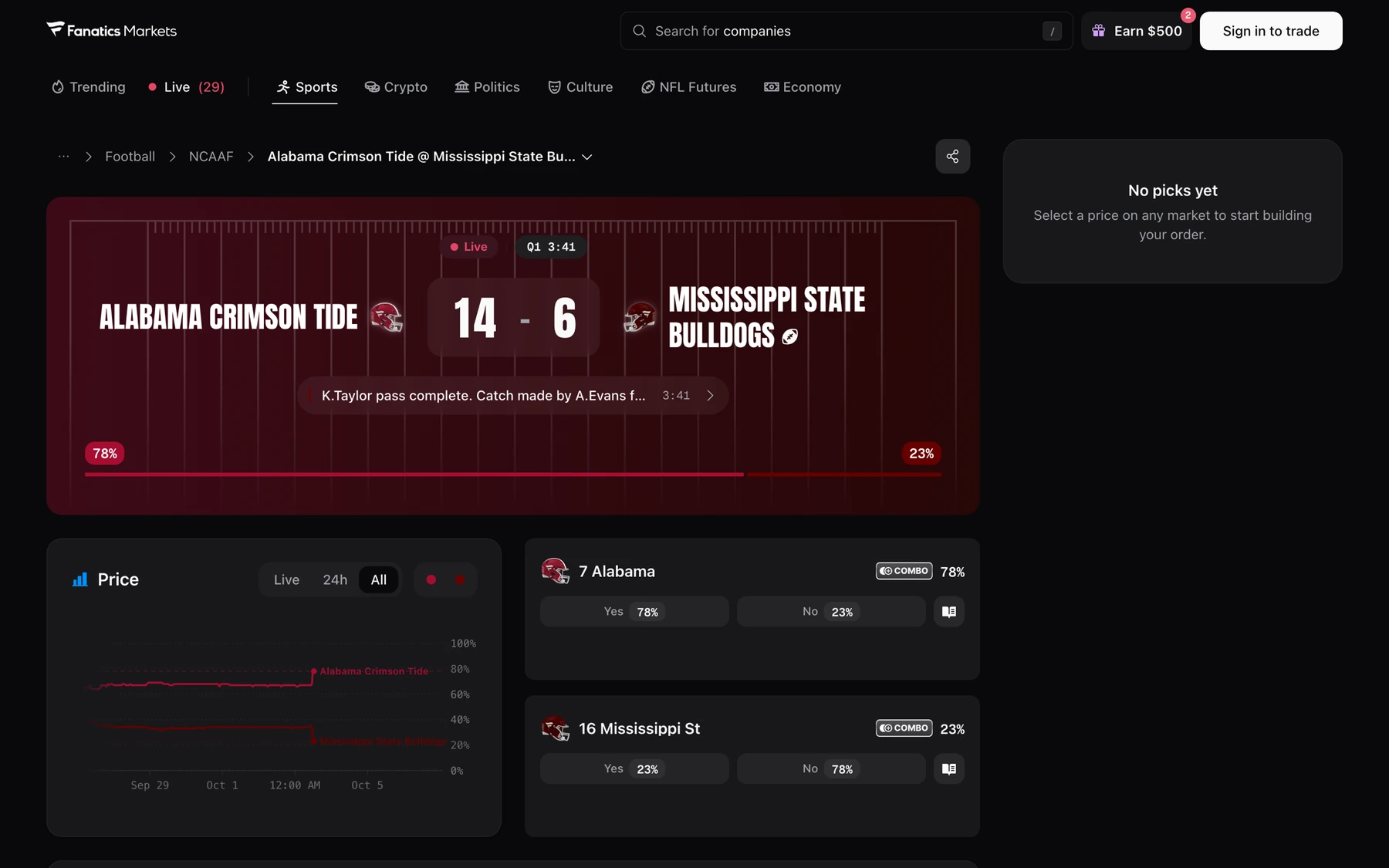
The product kept moving while I was there. By June 2026, a month before I left, it had an expanded web version, gave up to 10% back in FanCash on trades, win or lose, and offered Combos, several outcomes in one contract. Fanatics reported “a 50% adoption rate among the customer base” for Combos. As of October 2026, the iOS app is rated 4.7 from about 1,200 ratings.
What did I learn or change?
This was my third time launching a regulated consumer product, after Barstool Sportsbook and Fanatics Sportsbook & Casino. This time AI let a much smaller team move very quickly. We rethought our processes to optimize for speed while staying compliant, and organized engineering into pods so decisions didn’t wait on the whole organization.
The new lesson was about structure. In a product that moves money, the regulatory structure is part of the architecture. Who holds the funds decides how a deposit works. Who lists the contract decides what a market can be. You can’t bolt that on at the end, and you can’t assume it will stay the same. Sports betting already demands flexibility, because every state has its own rules. Prediction markets demand more: the whole structure can change overnight.
Some things carried over from the sportsbook unchanged. MK said Fanatics took its sportsbook practices on integrity and consumer protection and applied them to prediction markets “regardless of what the law requires.” The limits, timeouts and self-exclusion tools were in the first release, not on a roadmap.
Building Markets is also what moved me toward product. I realized I wanted a bigger hand in where the whole product was going, not just in its architecture.
Built by the Fanatics Markets team, on infrastructure from the Fanatics Sportsbook & Casino team, with contracts listed and cleared by Crypto.com | Derivatives North America.